MSAT Fact Book
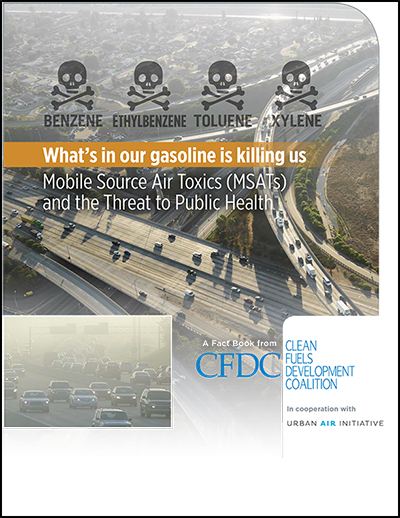
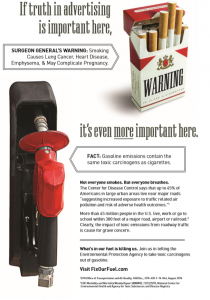
The Mobile Source Air Toxics Fact Book was supported by more than two dozen groups from the ethanol industry and makes a compelling case for replacing carcinogenic octane additives with clean octane ethanol. Find it and related information through CFDC’s Safe Gasoline Campaign.
Experience: The Difference
For 30 years the Clean Fuel Development Coalition (CFDC) has been working with hundreds of diverse private and public organizations to build common ground and effective coalitions that can change status quo to save lives and create jobs. CFDC members and supporters include fuel and chemical producers, automakers, technology developers, agricultural producers, and NGOs interested in economic, energy, environmental, and national security.
CFDC is 501(c) (6) non-profit organization that actively supports the increased production and use of fuels that can reduce air pollution and oil imports. Through six administrations and sixteen Congressional delegations, CFDC has been building bi-partisan support in government to work with industry to foster healthy national economic, energy, environmental, and national security-related policies. Federal legislative and regulatory experience includes support for biofuel programs and incentives, working with Congress on the Energy Policy Act, Clean Air Act Amendments, the Reformulated Gasoline program, the Renewable Fuels Standard, and defending agency budgets for programs that help meet clean fuel and clean air regulations. At the state level, CFDC has helped develop clean fuel programs and industry initiatives that helped build the modern ethanol industry. CFDC works with all interested parties to support clean fuel related legislation and regulations that will drive new technologies that will help our country meet the ever-changing and complex demands of our society.
CFDC News & Events
CFDC Executive Director Doug Durante is a regular columnist for several publications, the following excerpts of recent articles have links to the full articles covering a variety of issues impacting ethanol and biofuels.
Ethanol + Hybrids – A Much Needed Game Changer
America’s energy challenge is no longer primarily about crude oil supply—it is about refining capacity and fuel production bottlenecks. Even with ample domestic oil production, the system is struggling to turn crude into the diesel and gasoline the economy actually uses. The most effective response is not simply more drilling or more imports, but a structural shift in how America makes and uses transportation fuel: a national high-octane fuel standard that pairs E30 with widespread hybrid vehicles. Extending supplies, lowering costs, reducing emissions, creating jobs, and providing a lifeline to US agriculture: its all there for the taking.
Freedom to Choose? Not When it Comes to Fuels
Raise your hand if you are tired of hearing about E15. Moses wandered the desert for 40 years, but we are catching up. It has been nearly 20 years since the initial application for approval of 15 percent, and 10 years seeking resolve of the RVP situation.
Why Don’t We Ever Learn?
At this point in time we have no clear picture of how the Iranian situation will end up but one thing is for certain– we in the US will remain dependent on oil for our transportation needs. If the public doesn’t like high gasoline prices, they would like them a lot...
Ethanol & Automakers: Time For a New Collaboration
Quick quiz: name a federal program or policy that costs taxpayers nothing, costs consumers nothing, provides value and regulatory relief to a heavily regulated business, provides value to the consumer in the way of lower fuels cost, strengthens American energy...
Can Ford’s U Tuen on EVs open the Road for Ethanol?
While it is technically incorrect to say the Biden administration mandated EVs, the emission and efficiency standards were so stringent that it appeared to be the only solution. But as they say, appearances can be deceiving and this was a classic example. There were...
Octane Can Save Agriculture—and Agriculture Can Save Octane: Averting A Farm Crisis with the Right Approach to Biofuels
As usual there is a lot of angst in middle America these days with uncertainty over RFS volumes, small refinery waivers, bird flu, budget cuts, and looming trade wars. But the greatest threat is the potential for a full-blown farm crisis. Many of us were in the...
Reduce Toxics in Gasoline!
CFDC Co-sponsored a forum at the United Nations Foundation recently that featured expert speakers and presentations covering a wide range of health and environmental issues. The National Farmers Union and the Environment and Energy Study Institute (EESI) also sponsored this day long forum. Health and environmental leaders are coming together calling for EPA to reduce toxic compounds in gasoline.
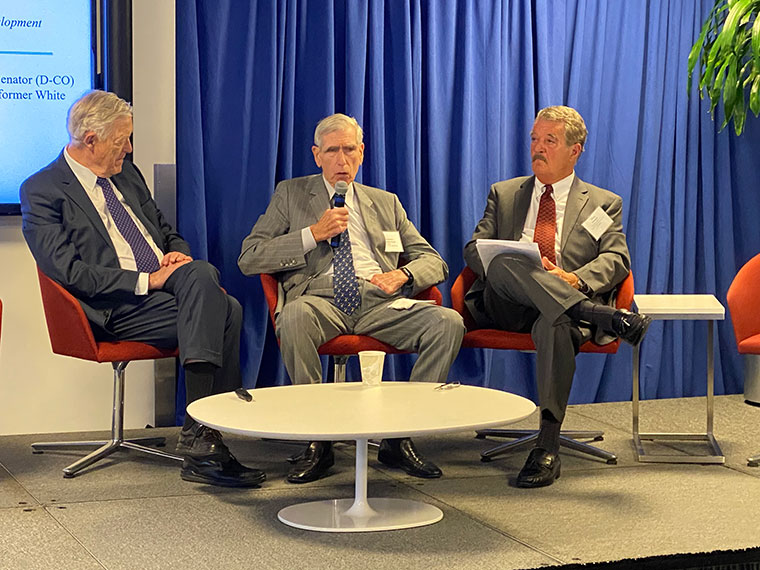
CFDC’s Doug Durante leads a discussion with UN Foundation Chairman and former Colorado Senator Tim Wirth, and C. Boyden Gray, former U.S. Ambassador to the European Union and White House Counsel to President George W. Bush.
Legislation & Regulation
- The primary driver for the advancement of cleaner fuels has been legislation at both the federal and state levels. While the ethanol industry has matured and requires no subsidies, without legislation encouraging and even requiring the use of clean-burning fuels the markets would not have been developed and investment would not have occurred.
- CFDC is an industry thought leader when it comes to shaping legislation that will propel clean fuels to the next level. From meetings with federal lawmakers on Capitol Hill to governors and state legislators across the country, CFDC helps guide public policy to ensure that the decisions are what is best for our country in the long-term. It’s public interest vs. special interest.
- Part of CFDC’s impact on the legislative process is achieved through providing factual and trusted information to the House, Senate, and Executive Branch.
- After Congress passes legislation, it is up to the different regulatory agencies to decide how the laws will be implemented. CFDC takes a very active role in helping the U.S. Environmental Protection Agency, the U.S. Departments of Energy and Agriculture implement the national renewable fuel standard, monitor the federal reformulated gasoline program, enforce the Clean Air Act Amendments, and meet the energy and environmental intents of Congress.
- There are several regulatory issues that are currently being decided with regard to fuel testing, emission modeling, CAFE standards, automotive technology, and octane standards for gasoline, mobile source air toxic emissions, and public health fuel-related research. Without the efforts of the CFDC and similar like-minded groups, there are no guarantees that fuels will continue to be cleaner and domestic energy producers will continue to grow and prosper.
Education
- One of the Coalition’s primary objectives is education. Without an appreciation for the benefits and value of clean fuels to our society, there will not be sufficient support at the Congressional and executive levels to change status quo and implement the new programs necessary to achieve those benefits. CFDC works with its members and other like-minded organization to compile and synthesize information that will stimulate the dialogue between industry, government, NGOs, the public, and the media to open the market and break down barriers to clean fuels. CFDC publishes Fact Books, White Papers, Issues Briefs, and provides Congressional testimony.
- Through CFDC’s foundation, several educational campaigns have been developed such as the FlexFuel & FlexFuel Vehicle Awareness Campaign supporting alternative fuels and vehicles. The Ethanol Across America campaign produced radio shows, focused on regional education campaigns, and articles for the trade press and mainstream media. Considered a thought leader in the area of clean fuels, CFDC is often called upon to provide a broader perspective as it is not a typical single issue trade association.
Outreach
- CFDC and its members have delivered hundreds of speeches to numerous organizations about the benefits of domestic, renewable, and environmentally friendly transportation fuels. CFDC has worked with the U.S. Council of Mayors, the National Conference of State Legislators, National Governors Coalition, Governors’ Biofuels Coalition, and the United Nations Council on Sustainable Development — to name a few. As part of its education and outreach program, CFDC has sponsored, co-sponsored, presented or participated in hundreds of national and international conferences, and special events. Examples include:
- Creating the concept and managing six Environmental Inaugural Balls
- Supporting 100+ international conferences on fuel quality
- Delivering Congressional testimony
- Testifying before the United Nations
- Supporting the Sustainable Energy Caucus and Congressional Renewable Energy Expo
- Participating in the Nation’s 4th of July parade, and countless state and community events that support the development of clean fuels.
- The more information that is available to the public, government officials and lawmakers, the more likely they are to support growth in cleaner-burning fuels. (See CFDC News & Current Events and Publications).